






How to seal a flat roof
Flat roofs are a popular choice for modern buildings, but they come with a unique challenge: effective waterproofing. Without a proper seal, flat roofs are vulnerable to leaks, damage, and costly repairs. In this guide, we’ll explore how to identify leaks in flat roofs, understand common causes of leaks, and, most importantly, how to seal a flat roof to protect your project for the long term.
How to Identify leaks in flat roofs
Before you can fix a leak, you need to find it. Flat roof leaks can be tricky to locate, as water often travels away from the source of the problem before showing visible signs. That said, there are a few tell-tale indicators to watch for:
- Water stains or damp patches on ceilings or walls inside the building.
- Mould or mildew growth in corners or along wall junctions. This often appears as black, green, or dark brown spots, sometimes with a fuzzy or slimy texture.
- Bubbling or peeling paint in areas close to the ceiling.
- Discoloured patches or cracks on the roof surface. Small surface cracks can be normal wear and tear, but deeper cracks, widespread cracking, or areas with staining around the cracks often point to a leak or membrane failure.
- Ponding water (standing water that lingers more than 48 hours after rain).
- Musty odours in rooms below the roof.
During inspections, it’s important to check both the interior and exterior of the building. Sometimes the leak is not directly above the visible damage, and water can travel through insulation or along joists, so a methodical approach is key.
Common causes of flat roof leaks
Flat roof leaks rarely happen without a cause. Unlike pitched roofs, which naturally shed water thanks to their slope, flat roofs rely on carefully designed drainage and continuous waterproofing layers to keep water out. This means even small design flaws, installation mistakes, or maintenance lapses can lead to leaks over time.
Understanding what causes leaks can help you identify risks early, prevent future problems, and repair damage before it worsens. Here are the most common causes:
Blistering
Blistering happens when pockets of air or moisture become trapped between layers of the roof membrane or between the membrane and substrate. Over time, heat and pressure cause these pockets to expand, forming raised bubbles on the roof surface. Left untreated, these blisters can eventually crack and allow water to get through..
Blistering is often caused by:
- Poor adhesion during installation
- Moisture trapped in the system at the time of application
- Thermal movement or extreme temperature changes
Ponding water
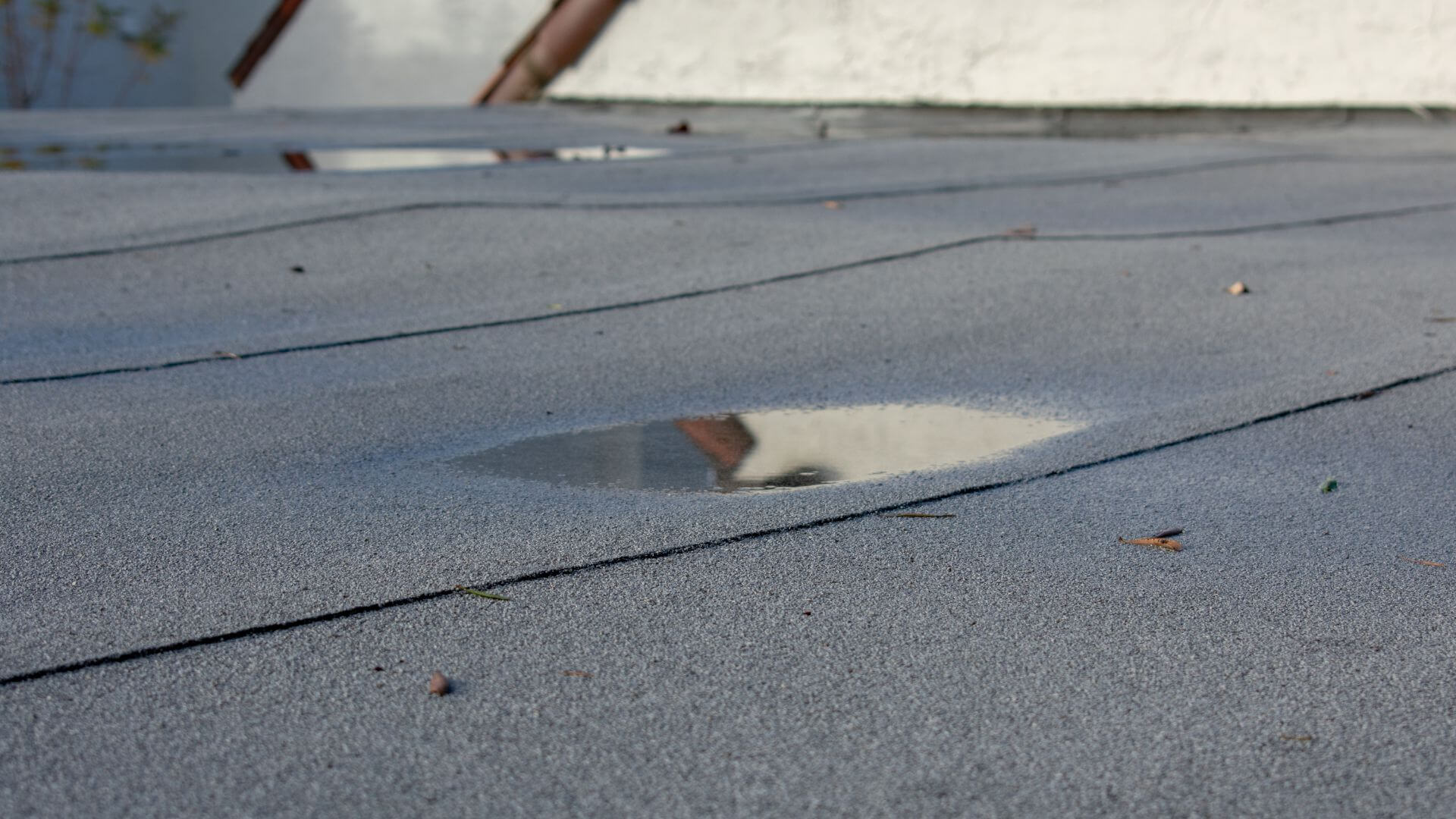
Ponding water refers to areas where water accumulates and does not drain within 48 hours. Flat roofs are not truly flat. They should have a slight slope leading towards the drains to direct water there. When water collects in low spots, it increases the risk of leaks, speeds up membrane degradation, and adds weight to the roof.
Ponding water often results from:
- Inadequate falls in the roof design.
- Blocked or poorly maintained drainage systems.
- Structural deflection or sagging over time.
Alligatoring
Alligatoring is a term that describes the cracking pattern that looks like the skin of an alligator. It usually occurs as bitumen-based membranes age and become brittle, often because of prolonged exposure to sunlight and temperature fluctuations. These cracks provide an easy route for water ingress.
Signs of alligatoring include:
- Fine, widespread cracking across the roof surface.
- Loss of surface granules (if any).
- A dry, brittle appearance.
How to prevent flat roof leaks
While no roof lasts forever, there are several proactive measures you can take to reduce the risk of leaks and help extend the lifespan of a flat roof. Older flat roofs often require closer monitoring, as materials may have become brittle or degraded over time, making them more prone to cracks or blistering.
Newer roofs, on the other hand, benefit most from routine checks to catch installation defects early and ensure drainage systems stay clear. Here are some examples of how to prevent flat roof leaks:
- Regular inspections – Schedule inspections at least twice a year. Look for signs of damage, ponding water, and debris buildup.
- Maintain drainage systems – Keep gutters, downpipes, and drains clear so that water can flow freely off the roof. Remove leaves, dirt, and debris regularly, especially after storms or in autumn when falling leaves are common. Use gutter guards where possible to reduce blockages, and check that drain covers are secure and free of obstructions. During inspections, run water through the system to make sure it flows away properly.
- Prompt repairs – Address small issues before they escalate, such as cracks, blisters, small punctures or loose flashing. A minor crack or blister can quickly develop into a major leak if left unattended.
- Use high-quality materials – Invest in reliable, proven waterproofing systems that are appropriate for the roof type and expected lifespan. Examples include self-adhesive bitumen membranes like Bituthene 4000, liquid-applied membranes for complex shapes, or torch-on felt systems for larger, durable coverings.
- Ensure correct installation – Waterproofing systems are only as good as their installation. Make sure to follow the manufacturer's guidelines carefully and choose products from reliable manufacturers like Sika and Visqueen. During installation, look for proper surface preparation, overlapping seams, securely fixed edges, and no trapped air bubbles or wrinkles.
How to waterproof a flat roof
When it comes to sealing flat roof leaks or installing a new waterproofing layer, there are several effective methods. The best choice depends on the roof’s condition, size, and use, as well as project requirements such as flexibility and budget.
For example, an older roof with cracks or uneven areas might benefit more from a liquid waterproofing system that can form a seamless layer over tricky surfaces. Large roofs often suit bitumen membranes or torch-on felt for cost-effective coverage and durability.
If the roof has numerous pieces of equipment or penetrations, a flexible liquid-applied system may be the best option for sealing around pipes and vents.
Surface preparation
No matter which system you choose, proper preparation is essential. A common cause of waterproofing failure is applying products to a dirty, damp, or unsound surface. Before waterproofing, make sure the roof is:
- Clean – Remove dirt, dust, moss, and any loose material with a stiff-bristled brush, broom, or even pressure washer.
- Dry – Avoid applying products to wet surfaces. After cleaning or rain, allow the roof to dry thoroughly before starting waterproofing. This could mean waiting 24 to 48 hours, depending on the conditions. Industrial fans could speed up the drying process, mainly in areas that are damp or shaded.
- Sound – Repair cracks, splits, and blisters. Reinforce weak areas. For small cracks or splits, use a roofing sealant or bitumen mastic applied with a putty knife or caulking gun. Blisters may need to be carefully cut open, dried out, and patched with a compatible membrane or repair kit. Reinforce weak areas with roofing fabric or mesh embedded in liquid waterproofing products.
- Primed – Many systems, such as bitumen-based products, liquid-applied membranes, and polyurethane coatings, require a primer to ensure proper adhesion.
Waterproofing methods
There are a few waterproofing methods available for flat roofs, each with its own benefits depending on the roof’s condition, complexity, and budget. Selecting the right method is crucial for ensuring a durable, watertight seal that meets your project needs. Below, we explore some of the most common options used.
Bitumen paint
Bitumen paint is a simple and cost-effective option for smaller repairs or temporary waterproofing. It can be applied directly to the prepared surface with a brush or roller and is suitable for sealing cracks or small areas of wear.
Bitumen paint provides a waterproof layer that is resistant to rain and weathering, but it is not as durable as other systems, so it’s often used for patch repairs or short-term solutions.
Bitumen membranes
For more robust, long-lasting protection, bitumen membranes are a popular choice. These typically come in rolls and are applied in layers, often using a torch-on method for adhesion.
Bitumen membranes offer excellent durability, resistance to mechanical damage, and UV protection. They are ideal for larger areas or complete roof coverings, and when installed correctly, can provide a lifespan of 20 years or more.
Liquid waterproofing systems
Liquid waterproofing products are a versatile solution for flat roofs, particularly where complex detailing or penetrations make sheet membranes impractical. Applied as a liquid, these systems cure to form a seamless, elastomeric membrane that adapts to the roof’s contours.
Liquid systems are ideal for roofs with plant equipment, pipework, or complex shapes, and they provide excellent flexibility and resistance to weathering.
Products to help your flat roof project
Choosing the right products is extremely important for creating a durable and watertight flat roof. Whether you’re sealing small cracks, applying a full membrane system, or wanting to make sure your products have proper adhesion, these products will help you get the job completed effectively. Here are some recommended solutions for a range of flat roof waterproofing needs.
-
Bituthene 4000 is a self-adhesive bitumen membrane that provides long-lasting waterproofing for flat roofs. It is designed for ease of installation and offers excellent protection against water ingress.
- Masterbuild Bitumen Paint is a solvent-based, general-purpose bitumen coating that offers effective waterproofing for flat roof repairs. Ideal for small areas or patch repairs, it creates a durable, weather-resistant seal.
- Bituthene Primer S2 is a solvent-based primer designed to improve the adhesion of Bituthene membranes to substrates. Essential for preparing surfaces before applying self-adhesive bitumen membranes.
Browse our waterproofing products today
Here at Complete Construction Products, we offer a wide range of waterproofing products that’ll certainly support your flat roof project. Whatever you need, we’re sure to have the right solutions. Have any questions about our products? Simply contact us today, and our fantastic team will be more than happy to assist you.