






Sealing block paving to stop weeds
Block paving is a favourite among homeowners for its classic look, but it can also be a place where weeds can thrive. Why? Because every tiny joint makes for a great place for seeds to settle, sprout, and spread, especially when moisture is involved. The issue isn’t that they’re just not nice to look at (even though that is true), but they can actually cause damage to the paving over time, leading to uneven surfaces.
Landscaping products and solutions like sealing block paving can be a preventative measure to block weed growth at the root. A good sealer binds with the jointing sand and hardens it so that weeds can’t find a way in. Not only that, but it also creates a barrier against water, oil, and other grime, so that the ongoing maintenance is easier for you.
In this blog, we’ll walk you through how to seal block paving to stop weeds, step by step. From clearing out any existing growth to choosing the right sealer for your project and applying it, we’ll cover it all. Throughout all of this, don’t forget to always check the manufacturer’s guidance for the products you’re using before preparing and applying.
Why do weeds grow in block paving?
Weeds don’t need much to be able to grow in these conditions, just warmth, moisture and airborne seeds, as we mentioned before. Once a seed lands in the crack, it’ll sprout and send roots through the sand, and continue to grow.
The role of unsealed sand and moisture
Kiln-dried sand is often used to fill joints between paving blocks, which is porous and lightweight. It’s great for stabilising blocks, but when left unsealed, it can invite weed growth. When water seeps through, it encourages the root systems to flourish, and without a sealer to harden the sand and repel moisture, those tiny cracks can become the perfect environment for weeds to grow, especially when dirt, dust and debris like leaves accumulate there. The wind often blows seeds between paves, and that’s when they begin to settle.
Common weed types and where they can creep in
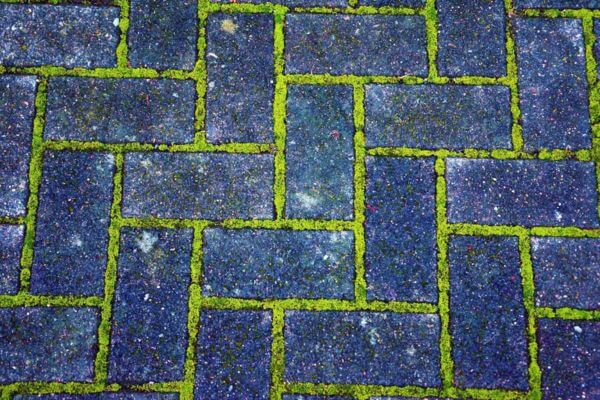
What kinds of weeds are often found on block paving? There might actually be more than you think. Here are some of the most common weeds that you’ll find on block paving, and where you might find them:
- Dandelions: Can be deep-rooted and quick to regrow, even after removal.
- Moss: Thrives in shaded, damp areas and usually creates a slippery green surface.
- Clover: Low-growing and fast-spreading, especially in joints exposed to sunlight.
- Chickweed: Invasive and forms dense mats across surfaces.
- Algae: Grows in areas with high moisture and creates dark, slimy patches.
- Wind-blown seeds: Can easily settle in unsealed joints and germinate fast.
What does sealing do?
Sealing your block paving is more than just a cosmetic solution. It’s a way to defend your block paving from weeds as it strengthens your paving from the inside out. Once added, it can significantly improve the longevity of your paving in terms of keeping it clear from weeds, and if weeds do start appearing in future, then maintenance is still reduced.
Stops weeds before they start
Does sand stop weeds? In a way, yes. Once sealed, the joint sand becomes rigid, making it difficult for weeds to settle or push through. By managing this vulnerable layer effectively, you turn a thriving environment into an area with almost no space and no oxygen, where weeds struggle to grow.
Repels water, dirt, and oil
Sealers can form a hydrophobic barrier over the paving surface, meaning water beads off rather than soaking in. Reducing moisture in these cracks means it’s harder for weeds to grow. These sealers can also help keep your paving free from dirt, oil and any grime that could cause staining.
Reduces maintenance and prolongs surface life
Less water absorption means less erosion, and less erosion means a more stable surface. Sealing helps preserve the structure of your paving by protecting the bedding layers below and minimising joint washout. This means longer-lasting performance and fewer repairs.
Step by step — how to seal block paving to stop weeds
Stopping weeds isn’t about a quick fix. It’s about long-term protection through removal and prevention right from the start. By following our key steps, you can end up with a surface that’s not just clean, but weed-resistant for seasons to come.
Step 1: Remove existing weeds and clean thoroughly
Before any cleaning happens, it’s important that you start with a clean slate, and that means the removal of weeds and a thorough cleaning of the joints.
- Manual vs chemical weed removal: Start by removing weeds manually, including the roots. If you’re unable to completely remove the weeds, then weed removal might be necessary. When you’re using chemical weed remover, be sure to wear gloves and protective gear so it doesn’t irritate or harm your skin, eyes, or lungs.
- Pressure washing: You could use a pressure washer to remove remaining debris, moss, and roots. Use a fan nozzle to avoid dislodging too much sand from the joints, but don’t point the jet directly into the joints, as it can create deeper crevices and damage the block paving. Instead, use the fan nozzle at an angle so that the pressure is distributed more safely.
- Allow to dry: After washing, let the area dry completely, which could take anywhere from several hours to overnight. This is because a damp surface can impact the sand refill and sealer adhesion.
Step 2: Resand the joints properly
After cleaning, those gaps between your paving blocks are wide open, and if they’re left unfilled, they can become a prime spot for weeds and water erosion. This is where resanding comes in, as it’s the structural reset that prepares your surface for sealing.
- Why kiln-dried sand is great: This type of sand is ultra-fine, dry, and perfect for filling joints, stabilising the blocks and creating a solid base for the sealer to bind to.
- Sand depth guidelines: Aim to fill the joints up to 1cm below the surface of the block to allow the sealer to harden without overflowing.
- Tools for sweeping: Use a stiff-bristled broom to work the sand into each joint, then remove any excess that is still on the surface.
Step 3: Choose and apply the right sealer
This is where the main transformation happens. It fortifies your paving against the weather, stops weed regrowth, and helps your block paving look immaculate. Choosing the right formula and applying it properly is key to getting great results that last. Here are some features to look for when purchasing your sealer:
- Sand or joint binding: Look for sealers or jointing compounds that harden or stabilise the joint fill to stop weed growth before it starts.
- Weed inhibition: Some products are formulated specifically to resist growth by blocking light and moisture through a visible or semi-visible barrier that sits on the paving surface and in the joints.
- Water repellence: Water-repellent (Hydrophobic) surfaces reduce moisture by preventing it from seeping through. They do this by forming a protective barrier, usually made from silicone, silane/siloxane, or acrylic polymers, which causes water to bead on the surface and run off, rather than being absorbed. As we already know, moisture is a key factor that encourages weeds to grow.
- Deep penetration: Deeper penetration into joints ensures longer-lasting protection thanks to the points mentioned above.
- Finishing options: You can get sealers with a variety of aesthetic finishes, whether that be matt, natural, or a satin look.
- Technical specifications: Check drying times, compatibility with your paving type, and application conditions. You’ll be able to find this information on the product data sheets.
- Manufacturer’s guidelines: No matter what, always follow the manufacturer’s guidelines on preparation and application. Our advice is general guidance on sealing block paving for weeds, but certain product instructions might deviate from certain processes.
Step 4: Post-seal maintenance
Now that you’ve sealed the joint, it’s essential to keep it that way. A good seal gives your block paving a fresh start, but regular maintenance will be needed to keep it weed-free. With a few occasional touch-ups, you’ll be able to help keep your sealant working for longer, protecting your surface from any greenery, stains, and wear.
- Sweeping and cleaning: Sweeping and cleaning any leaves or soil that might be covering your paving can help prevent moss buildup. A light rinse or jet wash a few times a year should keep things tidy, but it might be required more frequently depending on the buildup on your own paving.
- Resealing every few years: Sealants will fade over time, usually due to weathering, specifically UV radiation, heat, and chemical exposure. So, resealing every 2-4 years can help you stay ahead.
- Spot-treating problem joints: If you notice specific spots where there’s loose sand or weeds returning, then don’t wait until the whole surface needs attention before dealing with it. Top up the joint with sand and reapply with sealer.
Tips and common mistakes to avoid
Even with the right products, sealing block paving can go wrong if key steps are rushed and not followed correctly. Here are some mistakes that we often see, and how to avoid them:
Skipping the drying phase
It’s a crucial part of the process, and even if it looks dry, residual moisture deep in the joints can still affect a good seal. Trapped water prevents bonding and can result in patchy finishes.
Tip: Allow the surface to dry for at least 4-6 hours in warm, dry weather, or overnight if it’s cooler. This is because dry joints provide better adhesion.
Over-saturating the sand
Applying more sealer doesn’t always mean better results. Putting too much on the surface can cause sand to lift, joints to soften, and sealer to pool unevenly, leading to blotches, weak joints, and in some cases, a complete rework.
Tip: Focus on saturating the joints. You can use a roller, sprayer, squeegee, or whatever the manufacturer’s guidance suggests to evenly distribute the product into the gaps without overloading them.
Walking or driving before full cure
The sealer needs time to fully harden and bond properly. Walking or driving on it when it’s not ready can leave imprints and maybe even break the seal, meaning it won’t be effective in stopping weed growth.
Tip: Respect the cure time in line with the manufacturer’s guidance. Usually, this is 12-24 hours for foot traffic and 48-72 hours for vehicle traffic, depending on the exact product.
Using the wrong type of sealer
Not all sealers are compatible with all paving types or jointing systems. Using the wrong formula can end up in surface whitening, weak binding, or even damage to the paving material.
Tip: Make sure the sealer you’re using works with your block paving and jointing product.
Find products to help your block paving project
Whether you’re a contractor preparing for your next project or a homeowner looking to protect your investment, using the right materials is essential to getting professional, long-lasting results. At Complete Construction Products, we stock a high-quality range of products designed for all types of projects.
Browse our full range of Urban Landscaping Products for everything you need to seal, fill and finish block paving with confidence. Not sure which solutions suit your surface? Our expert team is here to help. Contact us today for personalised advice and product guidance.